IRS Payment Plan vs. Personal Loan: Which is the best option for paying taxes?
IRS payment plan vs. personal loan: compare costs, interest rates, credit impact, and benefits to choose the best option.
Tax repayment plan or personal loan: which costs less?
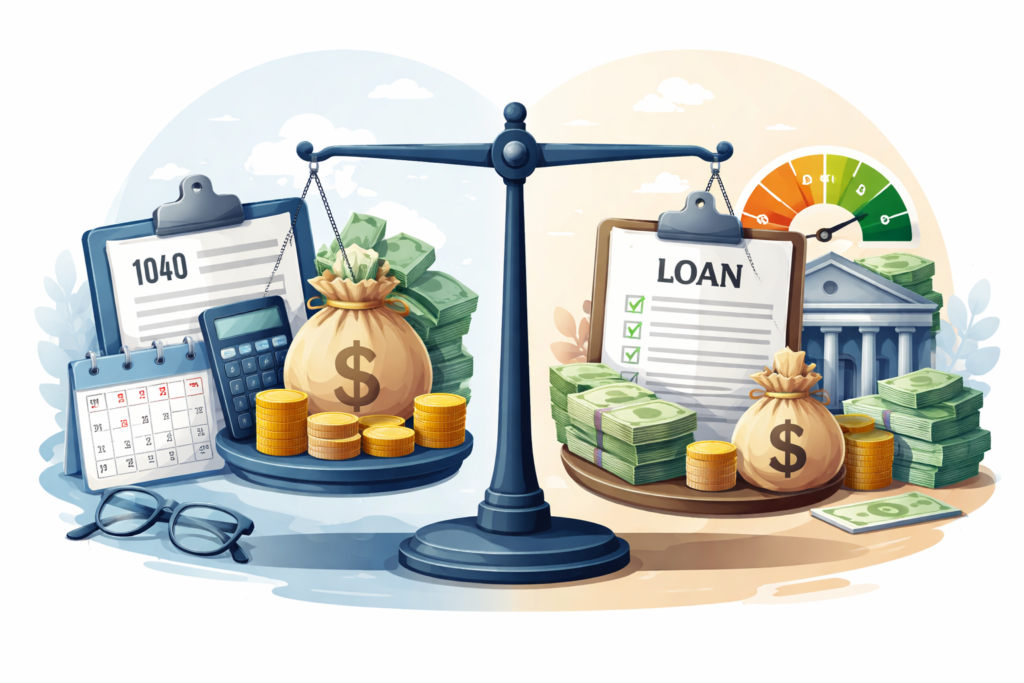
Owing taxes can be stressful, especially when the amount due is more than you can comfortably pay upfront.
Fortunately, taxpayers who can’t pay their full tax bill immediately usually have two main options: enrolling in an IRS payment plan or taking out a personal loan to cover the balance.
Both solutions can help you avoid penalties and reduce financial pressure, but which one is actually better? The answer depends on your financial situation, credit profile, and long-term goals.
Below, we break down how each option works, along with their pros and cons, to help you make the smartest choice.
What Is an IRS Payment Plan?
An IRS payment plan, officially called an installment agreement, is a program offered by the Internal Revenue Service that allows taxpayers to pay their tax debt over time instead of all at once.
There are two main types:
- Short-term payment plans, typically for balances paid off within 180 days;
- Long-term installment agreements, which can stretch payments over several years.
Interest and penalties still apply while the balance is unpaid, but the rates are generally lower than many private lending options.
Advantages of an IRS Payment Plan
- Lower interest rates compared to most personal loans;
- No credit check required;
- Direct arrangement with the tax authority;
- Flexible monthly payment options based on your balance.
Disadvantages
- Interest and penalties continue until the debt is fully paid;
- Setup fees may apply for long-term plans;
- IRS may place a tax lien on large balances;
- Less flexibility once the agreement is in place.
What Is a Personal Loan for Paying Taxes?
A personal loan is money borrowed from a bank, credit union, or online lender that you can use to pay your tax bill in full.
You then repay the lender in fixed monthly installments over a set period, usually with a fixed interest rate.
This option removes your debt from the IRS immediately, replacing it with private debt.
Advantages of a Personal Loan
- Fixed interest rate and predictable monthly payments;
- No ongoing IRS penalties once taxes are paid;
- Potentially faster payoff timeline;
- Greater flexibility in choosing loan terms.
Disadvantages
- Higher interest rates, especially for lower credit scores;
- Credit check required;
- Loan approval not guaranteed;
- Missed payments can negatively impact your credit.
Comparing Costs: IRS Plan vs. Personal Loan
Cost is often the deciding factor. IRS payment plans typically have lower interest rates than personal loans, particularly if your credit score is average or below. However, IRS penalties, such as failure-to-pay penalties, can add up over time.
A personal loan may cost more in interest, but if you qualify for a low rate and pay it off quickly, it could end up being cheaper overall.
The key is comparing the total repayment amount, not just the monthly payment.
Impact on Credit Score
An IRS payment plan does not directly affect your credit score, since the IRS does not report to credit bureaus. However, if a federal tax lien is filed, it could indirectly impact your financial standing.
Personal loans, on the other hand, are reported to credit bureaus. On-time payments can help build credit, while missed payments can damage it.
Which Option Is Best for You?
An IRS payment plan may be the better choice if: You have limited or poor credit; you want the lowest possible interest rate and you prefer dealing directly with the IRS.
A personal loan might be better if:
- You qualify for a low interest rate
- You want to stop IRS penalties immediately
- You prefer fixed payments with a clear payoff date
- You want more control over repayment terms
Final Thoughts
There’s no one-size-fits-all answer when deciding between an IRS payment plan and a personal loan.
An IRS plan is often the safest and most accessible option, especially for those with credit challenges.
A personal loan, however, can make sense for taxpayers who qualify for favorable rates and want to eliminate IRS involvement quickly.
Before choosing, review your budget, compare interest rates, and consider how long it will take to pay off the debt. In some cases, consulting a tax professional or financial advisor can help you avoid costly mistakes and choose the most efficient path forward.
Paying taxes may not be pleasant, but choosing the right payment strategy can make it far more manageable.

Related content
Why purchase umbrella insurance?
Pequeno resumo do post recomendado
Keep reading * You will remain on the current website