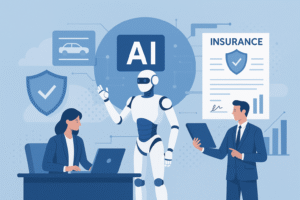
Insurance outlook: Managing change is business as usual
Discover how the insurance sector is turning constant transformation into a strategic advantage, driven by technology, culture, and evolving.
Understanding the main perspectives on return on investment in insurance

The insurance sector is going through one of the most dynamic phases in its recent history. Regulatory shifts, technological advances, and rising consumer expectations have stopped being isolated events and have become part of everyday operations.
In this scenario, “managing change” is no longer a temporary project, it has become a core competency. Today, adapting quickly is not just a competitive advantage; it is a basic requirement for survival.
A market in constant transformation
In recent years, a movement that was already underway has accelerated: digitalization, new risk models, economic pressures, and demands for transparency have completely reshaped the industry.
The pace of transformation is so intense that, for many companies, keeping up with the market already means undergoing continuous change in much shorter cycles.
From a strategic perspective, insurers are facing an environment where absolute predictability no longer exists.
Economic volatility, increased climate risks, and emerging cybersecurity challenges create a constantly shifting landscape. In this context, the question is no longer: “Will there be change?” but rather “How can we respond to the next change more efficiently?”.
Technology as the main driver of evolution
Technology has gone from being a support function to becoming a protagonist.
Artificial intelligence, automation, advanced data analytics, and intelligent underwriting systems are redefining what it means to deliver quality service.
Insurers that invest in digital transformation gain clear advantages:
- More agile processes that are less prone to errors;
- More accurate pricing, based on real-time data;
- A smoother customer experience, with shorter and less bureaucratic journeys;
- Evidence-based decision-making, rather than relying solely on historical patterns.
Additionally, automation and integrated platforms enable teams to operate more strategically.
What once required manual analysis can now be performed by intelligent systems, freeing up time for high-impact activities such as product personalization and strengthening customer relationships.
Constant change requires a culture of adaptation
Transitioning to a more dynamic model does not depend solely on technological tools. It is essential to develop an organizational culture prepared to handle continuous transformation.
This means encouraging teams to experiment, test new ideas, and adapt without fear of failure.
Companies that can turn rapid learning into practical action stand out when the market demands immediate responses.
Another crucial point is internal communication: keeping all teams aligned, from customer service to back-office, ensures that changes are executed consistently and clearly.
An operation that understands the reasoning behind decisions becomes much more efficient when putting them into practice.
More informed, demanding, and digital customers
If in the past the insurance sector dealt with consumers who had limited information, today the reality is completely different.
Customers know how to compare products, understand pricing better, and are increasingly less tolerant of slow processes or lack of transparency.
This forces insurers to evolve in several ways:
- Simplifying language and contract structures;
- Offering true omnichannel service that performs well across all touchpoints;
- Providing fast and consistent responses;
- Creating more flexible products suitable for various profiles;
- Ensuring transparency in claims resolution.
Customer loyalty has also changed. It is grounded not only in product quality but primarily in the experience that accompanies the service.
Companies that invest in clarity, agility, and relationship-building gain a significant advantage.
Emerging risks and new opportunities
Global changes are also expanding the types of risks insurers need to understand.
Cybersecurity, climate change, new digital business models, the sharing economy, and increasing ESG demands create scenarios that require constant updating.
Yet alongside challenges, opportunities are emerging:
- Products designed for data protection;
- Solutions tailored to digital micro-entrepreneurs;
- Parametric insurance for climate-related events;
- Dynamic pricing models;
- Partnerships with startups and insurtechs.
Seeing transformation as opportunity, rather than obstacle, is what separates companies that grow from those that merely react.
Change is the new normal
In the insurance sector, managing change is no longer an additional skill. It is a natural part of operations.
The companies that thrive are those that understand transformation as routine and invest continuously in technology, culture, and innovation.
In a world where everything shifts quickly, the true competitive advantage lies in evolving every day. For insurers, this is not just a trend, it is the new way of doing business.

Related content
How to diversify your exports beyond the U.S
Discover how to diversify your exports beyond the U.S. with practical strategies to identify new markets, reduce risks.
Keep reading * You will remain on the current website